
Table of Contents
Introduction: Why Packing Right for Annapurna Base Camp Trek Matters
What Do I Really Need for a 14-Day Annapurna Base Camp Trek?
Essential Clothing for the Trek
- Layering System Explained
- Warm Jackets and Fleece
- Trekking Pants and Base LayersWhat Footwear Works Best for Annapurna Base Camp?
Do I Need Trekking Poles and Gear?
What Should I Pack for Sleeping Comfort?
What Food, Snacks, and Hydration Items Are Smart to Carry?
Which Toiletries and Personal Care Items Are Must-Haves?
Is a First Aid Kit Necessary on the Trek?
Electronics and Gadgets to Pack or Skip
What Documents and Permits Should I Carry?
Packing List Table for Quick Reference
Pro Tips for Packing Light but Smart
Conclusion: Packing for Annapurna Base Camp with Confidence
Key Takeaways
1. Introduction: Why Packing Right for Annapurna Base Camp Trek Matters
If you’re planning the Multiple Days Annapurna Base Camp Trek in Nepal, one of the first big questions is—what should I pack? Packing too much makes your bag heavy, while packing too little leaves you unprepared in the Himalayas.
According to a World Bank tourism study, trekking is one of the top three reasons international travelers visit Nepal (World Bank), and gear plays a big role in whether trekkers feel safe and comfortable.
Next, you’ll get a complete breakdown of what to carry for the trek, step by step.
2. What Do I Really Need for a 14-Day Annapurna Base Camp Trek?
This is the question almost every trekker asks before their trip. The answer is: pack smart, not heavy. For Annapurna Base Camp, you’ll need gear that can handle both hot days and freezing nights.
Imagine starting the trek in a light T-shirt at 1,000 meters and ending up in snow-covered trails above 4,000 meters. That’s how much the climate changes.
So your list should cover:
Clothing for both warm and cold weather
Proper footwear
Essential trekking gear
Sleeping comfort
Toiletries and personal care
First aid and medicines
Electronics and documents
3. Essential Clothing for the Trek
1. Layering System Explained
Instead of packing one heavy jacket, use the layering method—like stacking clothes depending on the temperature. Start with a base layer (like thermal tops), add a mid-layer (fleece or light down jacket), and finish with a waterproof jacket. This makes it easy to adjust during the trek.
2. Warm Jackets and Fleece
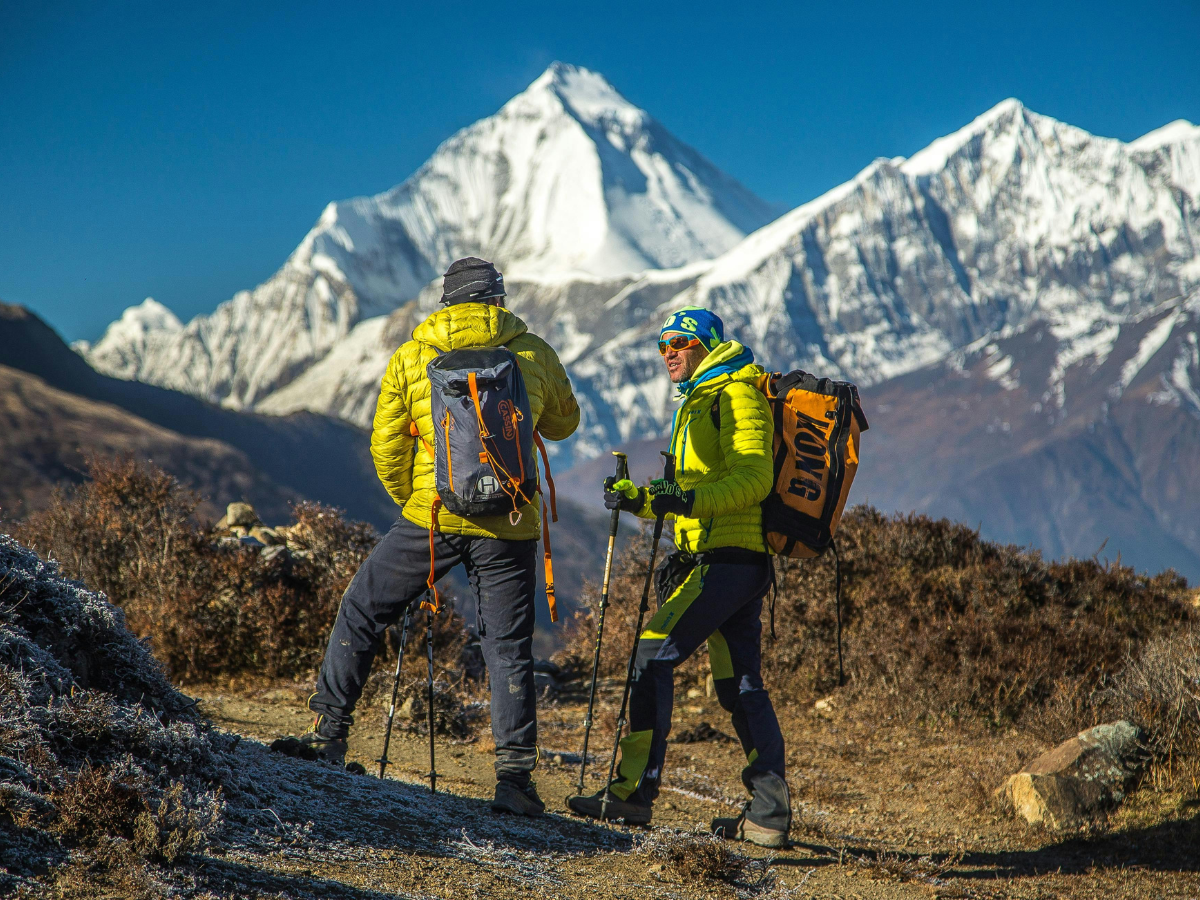
A good down jacket is your best friend above 3,000 meters. Evenings get icy cold. A fleece jacket is great for daytime trekking when it’s chilly but not freezing.
3. Trekking Pants and Base Layers
Bring two quick-dry trekking pants, one thermal pair of pants for nights, and one pair of comfortable trousers for tea houses. Avoid jeans—they’re heavy and take forever to dry.
4. What Footwear Works Best for Annapurna Base Camp?
Your shoes will decide whether the trek feels like an adventure or torture. A pair of waterproof trekking boots with ankle support is a must. Trails can get muddy, snowy, or rocky. Break them in before the trek to avoid blisters.
Also carry:
4–5 pairs of trekking socks
1 pair of warm woolen socks for the night
Light sandals or Crocs for evenings in tea houses
5. Do I Need Trekking Poles and Gear?
Yes, trekking poles help reduce knee strain, especially during steep downhill sections. Many trekkers underestimate this but regret it later. Other useful gear includes:
Headlamp (with spare batteries)
Sunglasses with UV protection
Water bottle or hydration bladder (2 liters)
Backpack rain cover
6. What Should I Pack for Sleeping Comfort?
Tea houses provide basic bedding, but nights can be very cold. Carry:
Sleeping bag rated for -10°C (rentable in Kathmandu)
Sleeping bag liner for extra warmth
Earplugs (tea houses can be noisy)
7. What Food, Snacks, and Hydration Items Are Smart to Carry?
While food is available in tea houses, snacks like energy bars, nuts, and chocolates give quick energy during long hikes. Water purification tablets or a filter bottle are also a must since bottled water is expensive and bad for the environment.
According to CDC (cdc.gov), safe drinking water is critical to avoid waterborne diseases during treks.
8. Which Toiletries and Personal Care Items Are Must-Haves?
Think of simple things you use daily:
Biodegradable soap and shampoo
Toothbrush and toothpaste
Wet wipes and hand sanitizer
Sunscreen (SPF 50+)
Lip balm with SPF
Toilet paper is not provided in tea houses, so always carry your own roll.
9. Is a First Aid Kit Necessary on the Trek?
Absolutely. Even small injuries can be significant in remote areas. Pack:
Band-aids, antiseptic cream
Blister pads
Pain relief tablets
Altitude sickness tablets (consult your doctor before taking)
The Wilderness Medical Society notes that altitude sickness can affect anyone above 2,500 meters. So don’t ignore it.
10. Electronics and Gadgets to Pack or Skip
Electricity is available in most tea houses, but may come at an extra cost. Carry:
Power bank (20,000 mAh recommended)
A camera or a smartphone for photos
Universal adapter
Headphones for downtime
Skip carrying laptops—they add weight and are not useful on the trail.
11. What Documents and Permits Should I Carry?
You need:
TIMS Card (Trekkers’ Information Management System)
Annapurna Conservation Area Permit (ACAP)
Passport copy and passport-sized photos
Permits can be arranged in Kathmandu or Pokhara. Always keep them handy for checkpoints.
12. Packing List Table for Quick Reference

13. Pro Tips for Packing Light but Smart
Rent heavy gear like sleeping bags and down jackets in Kathmandu if you don’t want to carry them from home.
Pack in dry bags inside your backpack so clothes stay safe from rain.
Carry only two pairs of trekking pants—you don’t need more.
Share snacks with fellow trekkers; it builds friendship and saves weight.
As mountaineer Sir Edmund Hillary once said, “It is not the mountain we conquer, but ourselves.” Packing smart helps you focus on the journey, not the struggle with your bag.
14. Conclusion: Packing for Annapurna Base Camp with Confidence
Packing for the 14-day Annapurna Base Camp Trek is all about balance. You don’t need a giant suitcase—just the right mix of warm clothes, solid shoes, essential gear, and a light mindset. Think of your backpack as your survival kit in the Himalayas. If you plan smartly, you’ll walk lighter, feel safer, and enjoy the beauty of Annapurna more deeply.
15. Key Takeaways
Use the layering method for clothing instead of heavy jackets.
Waterproof trekking boots are non-negotiable.
Always carry a sleeping bag and a water purification method.
Don’t skip permits like TIMS and ACAP.
Pack light, rent gear in Nepal when possible.
Written By: Nepal Hiking Team
About: Nepal Hiking Team, a travel agency, was founded by two veterans of the tourism industry, Ganga Raj Thapa and Balaram Thapa, in 2009.
Website: www.nepalhikingteam.com
Social Links:
Facebook: https://www.facebook.com/nepalhikingteam
Twitter: https://twitter.com/nepalhikingteam
Instagram: https://www.instagram.com/nepalhikingteam
LinkedIn: https://www.linkedin.com/company/nepal-hiking-team
Pinterest: https://www.pinterest.com/nepalhikingteam
Find Us On:https://maps.app.goo.gl/NWTnsHvddLNPV7QZA




Write a comment ...