
Dreaming of standing at the foot of the world’s tallest mountain is something many people share. The journey to everest base camp is not just a trek it’s an unforgettable life experience filled with beautiful mountains, local culture, and personal challenges. But before you start packing your bags, it’s important to understand what your body needs to handle this adventure. The everest base camp trek is not a technical climb, but it still requires good physical preparation and mental strength.
What Are the Physical Requirements for the Everest Base Camp Trek?
What Level of Fitness Do You Actually Need?
Let's be specific. Here's what the trail demands from your body:
Daily trekking demands:
Walking 5–8 hours per day on steep, uneven, rocky terrain
Cumulative elevation gain of roughly 8,000 meters over the full route
Maximum altitude of 5,364 meters at Base Camp (5,545m at Kala Patthar viewpoint)
Daily pack weight of 6–10 kg (daypack while porter carries main bag)
Consecutive days of effort with minimal full rest days
That's a serious ask. But it's also measurable which means you can train for it.
The honest fitness benchmarks for EBC beginners:

You don't need to hit every one of these perfectly before you start training. You need to hit them before you get on the plane to Kathmandu.
What Makes EBC Hard for Beginners Specifically?
Why Do First-Time Trekkers Struggle on the Everest Trail?
There are three physical challenges that catch beginners off guard every single time.
Challenge 1: Altitude and Reduced Oxygen
At 5,364 meters, there is roughly 53% of the oxygen available compared to sea level, according to the Wilderness Medical Society. Your lungs work harder. Your heart beats faster. Simple tasks tying your boots or climbing a short hill feel disproportionately exhausting.
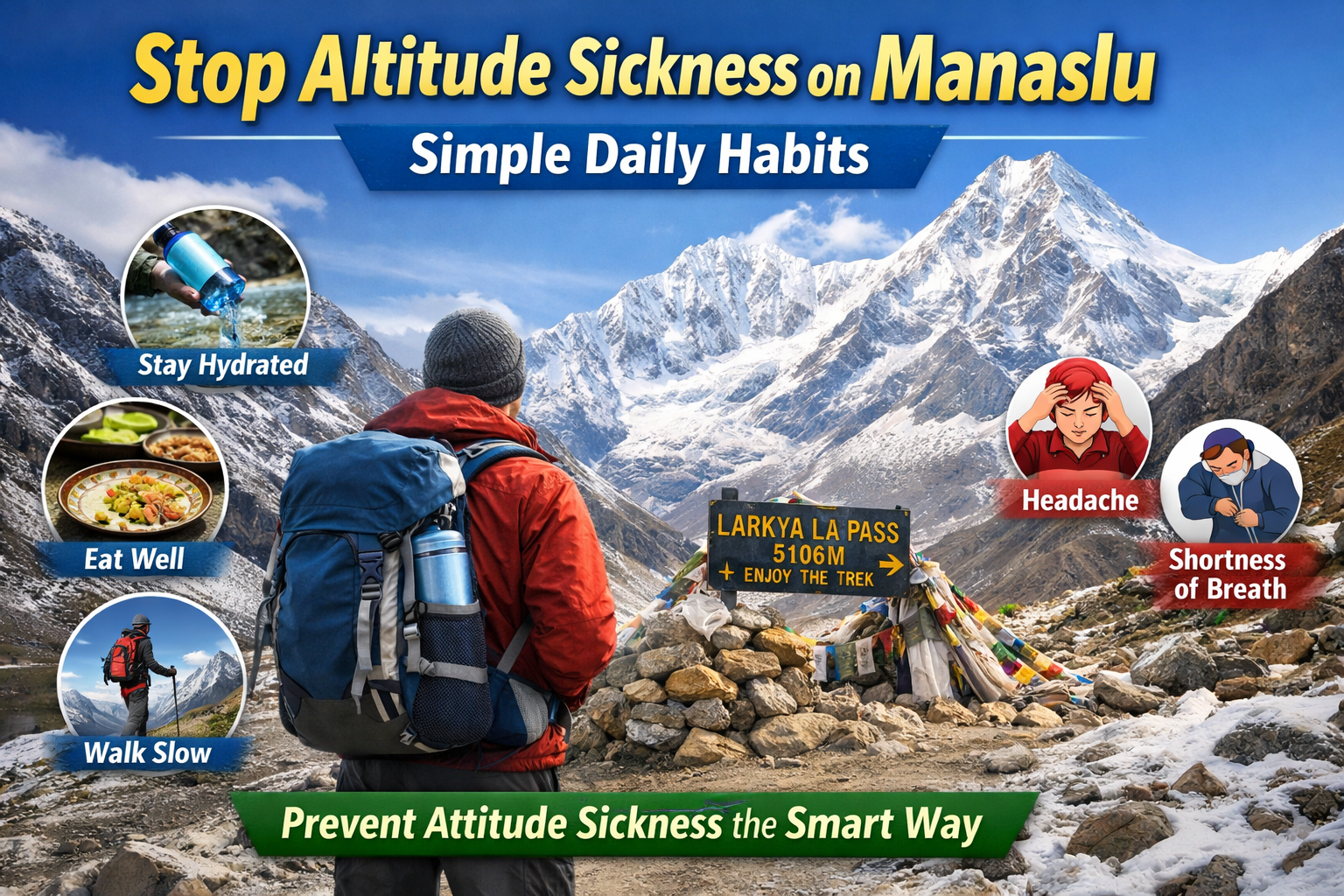
Altitude sickness (AMS) affects 25–75% of trekkers above 3,000 meters depending on ascent rate and individual sensitivity. No fitness level makes you immune. The only protection is a slow, acclimatization-friendly itinerary and listening to your body when it sends signals.
Challenge 2: Cumulative Physical Fatigue
One hard hike is manageable. Ten consecutive hard hikes are a different animal entirely. Your muscles accumulate fatigue. Your joints especially knees take a pounding on steep downhill sections. By Day 8 or 9, many beginners hit a wall they didn't expect, simply because they've never done sustained multi-day physical effort before.
Challenge 3: Mental Stamina at Altitude
Altitude doesn't just affect your lungs it can affect your mood, sleep quality, appetite, and mental sharpness. Disturbed sleep above 4,000 meters is extremely common. Reduced appetite means your body gets fewer calories precisely when it needs more. These factors compound into a kind of fatigue that no gym session can fully replicate.
How Should a Beginner Train for the Everest Base Camp Trek?
What's the Best Training Plan for EBC First-Timers?
You need at least 3 months of structured preparation. Here's a practical framework built around real trekking demands:
Month 1 Build Your Aerobic Base
The goal here is simple: get your cardiovascular system accustomed to sustained effort.
Walk 45–60 minutes daily, preferably on hilly terrain
Add light jogging 3x per week (20–30 minutes)
Begin bodyweight strength work: squats, lunges, step-ups, calf raises
Stretch daily focus on calves, hamstrings, hip flexors, and quads
Think of this phase like warming up an engine that hasn't been run in a while. You're not going full speed yet. You're making sure everything works.
Month 2 Build Trekking-Specific Endurance
Now you start training the way the trail will actually feel.

The non-negotiable in Month 2: train with your actual pack. Your shoulders, hips, and lower back need to get comfortable with that weight before you're climbing at altitude.
Month 3 Simulate the Trek
This is where you push your endurance closest to real conditions.
Do back-to-back hiking days a long day Saturday followed by another Sunday to train your body to perform without full recovery
Attempt at least one overnight or multi-day hike if your location allows it
Add hill repeats walk uphill fast, recover, repeat to build the specific strength needed for Himalayan climbs
Begin tapering 10–14 days before departure. Reduce intensity by 30–40%. Arrive rested.
What Are the Specific Body Parts You Need to Strengthen?
Which Muscles Matter Most on the EBC Trail?
EBC isn't a full-body workout in the balanced gym sense. It's a very specific kind of physical demand. Here's where to focus:
Legs (Most Important)
Quads take the load on steep descents the most joint-punishing part of the trek
Calves and ankles work overtime on rocky, uneven terrain for hours at a time
Glutes and hamstrings power you uphill through the Namche climb and beyond
Core (Underrated)
A strong core stabilizes your pack and protects your lower back through long hours of walking
A core weakness is a hidden cause of back pain that derails many trekkers by mid-route
Cardiovascular System
Your heart and lungs are doing extra work at altitude. A strong aerobic base is your most important physical asset.
Exercises that directly translate to EBC:
Step-ups with weighted pack (mimics ascending stone steps)
Downhill walking with pack (trains quad control for descents)
Single-leg squats (builds ankle stability and knee resilience)
Plank variations (core endurance without spinal load)
Medical and Health Checks Before You Go
What Should a Beginner Get Checked Before the EBC Trek?
Preparation isn't just physical training. Your health status matters.
Get these checked before you book:
Cardiovascular health — altitude puts real strain on your heart. If you're over 50, have high blood pressure, or any heart history, get a proper cardiac check.
Blood oxygen and lung function — particularly relevant if you're a smoker or have asthma
Knee and joint health — pre-existing knee issues need medical clearance and a physio plan
Mental health — altitude and isolation can amplify anxiety and depression. Speak to your GP if this is relevant.
Medications to discuss with your doctor:
Diamox (Acetazolamide) — helps your body acclimatize faster above 3,000m. Requires a prescription. Not suitable for everyone.
Ibuprofen — useful for muscle soreness management on trail (always carry it)
Ondansetron — for nausea management if AMS hits
Beginner vs. Prepared Trekker: What's the Real Difference?

Preparation is the variable that separates a great story from a half-finished one.
Do You Need a Guide as a Beginner on EBC?
Is a Guide Mandatory for First-Time Trekkers?
Since Nepal's mandatory guide regulation came into full effect in 2023, all foreign trekkers are required to be accompanied by a licensed guide on the Everest Base Camp Trek. There are no exceptions.
For beginners specifically, this rule is a safety net you'll be grateful for. A good guide monitors your oxygen saturation daily, adjusts your pace when needed, manages your acclimatization schedule, and knows the signs of AMS before you do. They're not a luxury they're genuinely essential at this altitude.
Pre-Trek Physical Readiness Checklist
Use this in the final 4 weeks before your departure:
Complete a 5+ hour hike with your full daypack on actual trail
Do two back-to-back hiking days to test recovery
Confirm you can climb 20+ floors of stairs without stopping
Get a basic medical check heart, lungs, blood pressure
Break in your trekking boots (minimum 20+ hours of wear)
Practice sleeping in your sleeping bag to confirm warmth rating
Get a pulse oximeter learn your baseline oxygen saturation
Start tapering training 10–14 days before departure
Confirm travel insurance covers helicopter evacuation above 5,000m
Brief your guide or agency on any health concerns in writing
Key Takeaways
EBC is achievable for beginners but only with 3+ months of structured physical preparation.
You'll need to walk 5–8 hours daily for up to 16 days on steep, uneven terrain at high altitude — that demands a specific fitness base.
Altitude is the great equalizer — it doesn't care about your gym fitness. Acclimatization schedule and itinerary design matter more than peak physical condition.
Train your legs, core, and cardiovascular system — and always train with your loaded pack from Month 2 onward.
Back-to-back training days are the single most effective way to prepare for consecutive trekking days on the trail.
Medical checks are not optional — cardiovascular health, joint condition, and lung function should all be verified before departure.
A licensed guide is now legally required on EBC and for beginners, they're also your most important safety asset on the mountain.
Nepal Hiking Team offers expert-guided Everest Base Camp Trek packages with licensed local guides, full permit handling, flexible acclimatization itineraries, and 24/7 safety support giving beginners the best possible chance of standing in front of the world's highest mountain.
Final Thoughts
The Everest Base Camp Trek is one of those experiences that changes people. The kind you look back on decades later and still feel something. But it only gives you that if you actually finish it, and finishing it as a beginner starts with honest preparation, not wishful thinking.
Your body is more capable than you think. It just needs the right training, the right time, and the right support on the trail.
Nepal Hiking Team has guided countless first-time trekkers to Base Camp, people who'd never done a multi-day hike in their lives before. What they all had in common wasn't extraordinary fitness. It was the commitment to prepare properly and the wisdom to trek with experienced guides who knew exactly how to get them there safely.
If you're a beginner with Base Camp on your bucket list, start your preparation today. The mountain has been there for millions of years. It'll be there when you're ready. Make sure you are.




Write a comment ...